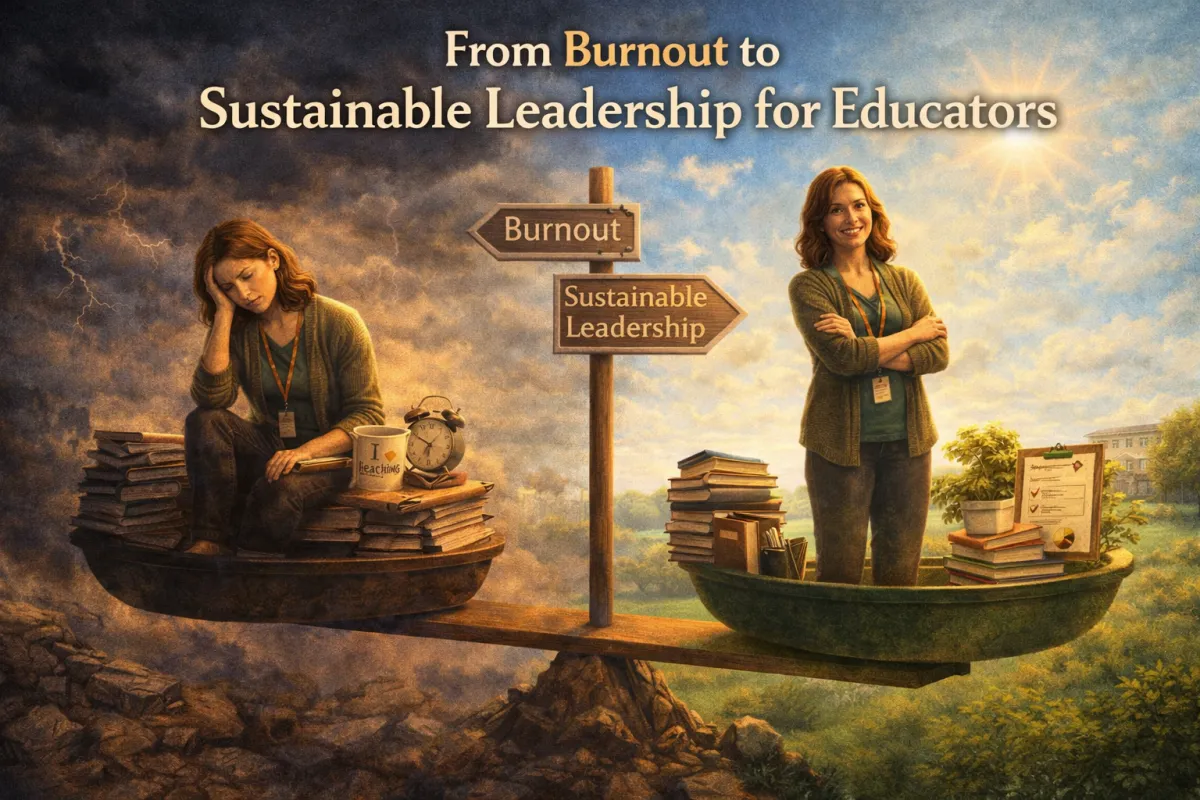
From Burnout to Sustainable Leadership for Educators
Many educators enter the profession with a deep sense of purpose. Teaching provides the opportunity to support students, shape communities, and make a meaningful difference in people’s lives.
Over time, however, the demands of the profession can begin to outweigh the available energy to sustain them.
Long hours, emotional responsibility, and expanding expectations can gradually push educators into a state of constant pressure. What once felt like passion can slowly begin to feel like exhaustion.
For many teachers and school leaders, burnout becomes an ongoing challenge.
Yet burnout does not have to be the permanent outcome of a career in education.
With the right structures, rhythms, and leadership approach, educators can move from survival mode into a more sustainable way of working and living.
Understanding the Shift From Burnout to Sustainability
Burnout often develops when the demands of work consistently exceed the energy available to meet them.
Educators may continue performing their roles successfully while internally feeling depleted.
Common signs of burnout include:
Persistent mental and emotional fatigue
Difficulty disconnecting from work
Reduced motivation or enthusiasm
Feeling overwhelmed by responsibilities
Sustainable leadership begins when educators recognize that long-term effectiveness requires protecting their energy and capacity.
Instead of constantly trying to keep up with increasing demands, sustainable leadership focuses on designing systems that support both impact and wellbeing.
The Difference Between Surviving and Leading
Many educators operate in survival mode without realizing it.
In survival mode, work becomes reactive. Teachers respond to immediate needs, urgent requests, and unexpected challenges throughout the day.
While this responsiveness is often necessary, constantly operating in this way can leave little space for intentional leadership.
Sustainable leadership introduces a different approach.
Instead of reacting to every demand, educators begin to:
Establish clear professional boundaries
Protect time for recovery and reflection
Prioritize responsibilities more intentionally
Structure their schedules around supportive rhythms
These adjustments help educators regain a sense of control over their time and energy.
Protecting Energy Is Essential for Leadership
Leadership in education requires emotional presence, patience, and consistent decision-making.
Without sufficient energy, these qualities become difficult to maintain.
Protecting energy may involve simple but meaningful changes such as:
Creating clear end-of-day transitions
Limiting after-hours communication
Protecting evenings for personal life
Reducing patterns of overfunctioning
These changes allow educators to replenish their mental and emotional resources.
Over time, this restored energy improves both personal wellbeing and professional effectiveness.
Building Sustainable Work Rhythms
One of the most effective ways to move out of burnout is to create predictable rhythms that support both work and recovery.
Rather than treating rest as something that happens only during holidays or breaks, sustainable leadership integrates recovery throughout the week.
Examples include:
Scheduling intentional pauses during the workday
Protecting one evening each week for personal restoration
Structuring weekly planning sessions that reduce last-minute stress
When work and recovery exist within the same rhythm, educators experience greater stability throughout the school year.
If you are curious on how to do this practicly, go ahead and visit www.kickislifedesign.com/info
Leading Your Life as Intentionally as Your Classroom
Educators are highly skilled at designing learning environments that support students.
However, many rarely apply the same level of intentional design to their own lives.
Sustainable leadership encourages educators to approach their work and personal lives with similar clarity.
This may include:
Aligning professional responsibilities with personal values
Creating structures that protect energy and focus
Practicing habits that support long-term wellbeing
When educators begin leading their own lives with intention, their work often becomes more sustainable and fulfilling.
Key Takeaways
Burnout occurs when work demands consistently exceed personal capacity.
Sustainable leadership focuses on protecting energy while maintaining impact.
Clear boundaries and supportive rhythms help educators move out of survival mode.
Recovery must be integrated into weekly work patterns, not only during breaks.
Intentional self-leadership allows educators to sustain their passion for teaching.
Conclusion
Education is one of the most meaningful professions, yet it can also be one of the most demanding.
When educators attempt to meet every expectation without protecting their energy, burnout becomes a predictable outcome.
However, when teachers begin shifting toward sustainable leadership, something important changes.
Instead of constantly reacting to pressure, educators develop rhythms and structures that support their wellbeing.
This allows them to remain present for their students, engaged in their work, and connected to the purpose that brought them into education in the first place.
Sustainable leadership does not reduce impact.
It allows educators to continue making a difference without sacrificing themselves in the process.

