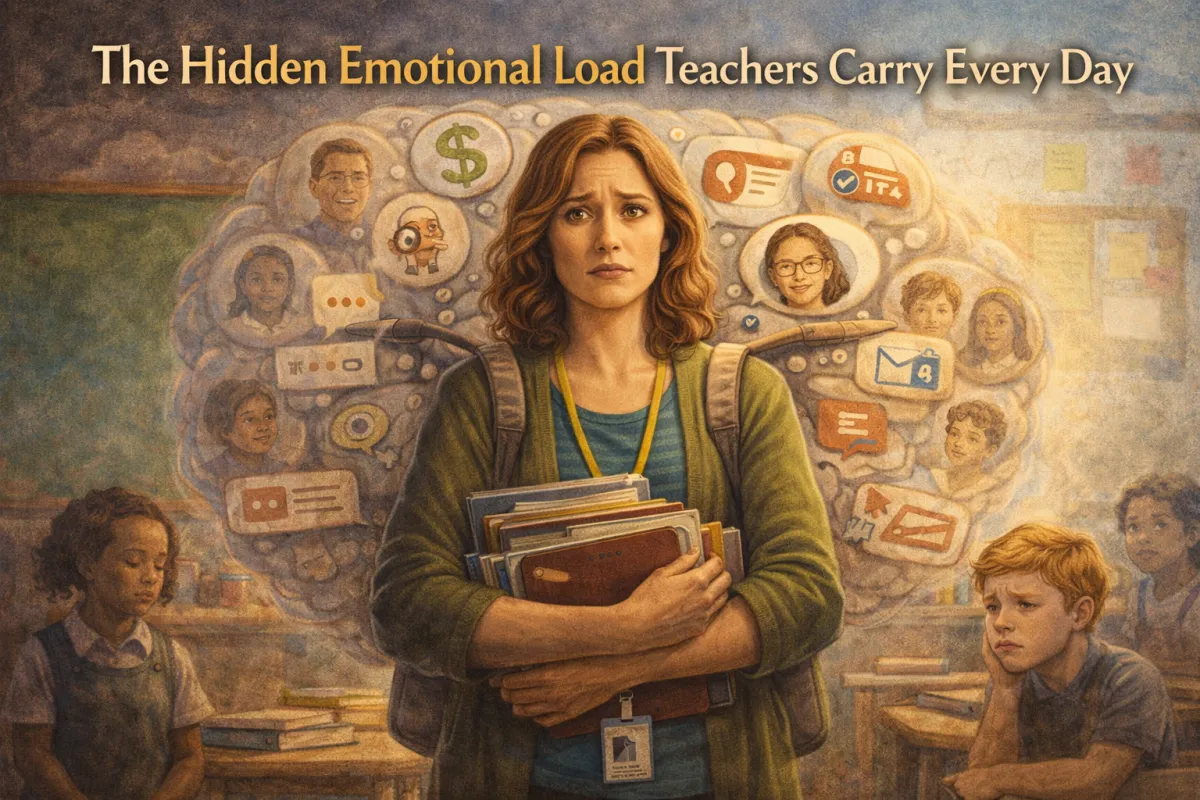
The Hidden Emotional Load Teachers Carry Every Day
Teaching is often described as a profession built on dedication, patience, and care. Educators support students academically, emotionally, and socially while also navigating the expectations of schools, parents, and colleagues.
What is less visible, however, is the emotional load teachers carry each day.
Beyond lesson planning and classroom management, educators frequently hold space for students’ worries, frustrations, and personal challenges. They manage complex classroom dynamics, support struggling learners, and respond to the emotional needs of their school communities.
Over time, this invisible responsibility can become heavy.
Many high-achieving educators continue to show up professionally and competently while quietly carrying a growing emotional burden. Without recognizing this hidden load, it becomes easy to believe that exhaustion is simply part of the profession.
Understanding the emotional labor involved in teaching is an important step toward protecting wellbeing and creating a more sustainable way to work in education.
What Emotional Load Means in Education
Emotional load refers to the responsibility of managing not only tasks but also the feelings, needs, and emotional experiences of others.
In education, this often includes:
Supporting students through personal difficulties
Managing classroom conflicts
Encouraging students who feel discouraged
Navigating challenging conversations with parents
Maintaining a calm and supportive presence throughout the day
Teachers frequently perform these roles simultaneously while continuing to deliver instruction and meet professional expectations.
Because emotional labor is rarely listed in job descriptions, many educators underestimate how much energy it requires.
However, consistently holding emotional space for others requires significant mental and emotional resources.
Why High-Achieving Educators Carry More Emotional Weight
Many high-achieving women in education naturally take on additional emotional responsibility.
They are often the people others turn to when challenges arise. Colleagues trust them to manage difficult situations, and students may feel comfortable sharing personal struggles.
These qualities make them effective educators, but they can also increase the emotional load they carry.
Over time, this can lead to patterns such as:
Feeling responsible for students’ wellbeing beyond the classroom
Absorbing the stress or frustration of others
Trying to solve problems that are outside their control
Prioritizing everyone else’s needs above their own
Without clear boundaries or supportive structures, this emotional responsibility can gradually contribute to exhaustion.
Signs the Emotional Load Is Becoming Too Heavy
Because emotional labor is often invisible, educators may not immediately recognize when it becomes overwhelming.
Some common indicators include:
Feeling emotionally drained at the end of the day
Difficulty disconnecting from student concerns
Increased irritability or fatigue
Feeling responsible for situations outside your control
A growing sense of mental overload
These experiences are not signs of weakness or lack of resilience. They are signals that the emotional demands of the role may be exceeding sustainable limits.
Recognizing these signals allows educators to begin making adjustments that protect their wellbeing.
Why Emotional Recovery Matters
Just as physical work requires physical rest, emotional labor requires time for emotional recovery.
Without intentional recovery periods, stress can accumulate over time and contribute to burnout.
Educators who prioritize emotional recovery often notice improvements in:
Mental clarity
Patience and focus in the classroom
Overall energy levels
Personal wellbeing outside work
Recovery practices might include quiet reflection, physical movement, supportive conversations with trusted colleagues, or activities that bring relaxation and enjoyment.
The goal is not to eliminate emotional engagement from teaching. Instead, it is to ensure that educators have opportunities to replenish the energy they give throughout the day.
Creating Sustainable Emotional Boundaries
One of the most effective ways to manage emotional load is to develop clear emotional boundaries.
Emotional boundaries allow educators to care deeply about their students while recognizing that they cannot carry every problem personally.
Healthy emotional boundaries might include:
Acknowledging student challenges without taking full responsibility for outcomes
Seeking support from colleagues when situations become complex
Creating mental transitions between school and home life
Allowing yourself time to decompress after emotionally demanding days
These practices help educators maintain compassion without becoming overwhelmed.
Over time, they support a more sustainable approach to teaching and leadership.
Key Takeaways
Teaching involves significant emotional labor that is often invisible.
High-achieving educators frequently carry additional emotional responsibility.
Signs of emotional overload include fatigue, mental stress, and difficulty disconnecting from work.
Emotional recovery is essential for maintaining long-term wellbeing in education.
Healthy emotional boundaries allow educators to care deeply without carrying every burden alone.
Conclusion
The emotional load carried by educators is rarely acknowledged publicly, yet it plays a significant role in how teachers experience their work.
High-achieving educators often give extraordinary care and support to the people around them. While this commitment is valuable, it must be balanced with practices that protect personal wellbeing.
Recognizing emotional labor, allowing time for recovery, and creating supportive boundaries can help educators sustain their energy and presence over time.
Teaching is meaningful work. Ensuring that it remains sustainable allows educators to continue making a difference while also caring for themselves.

