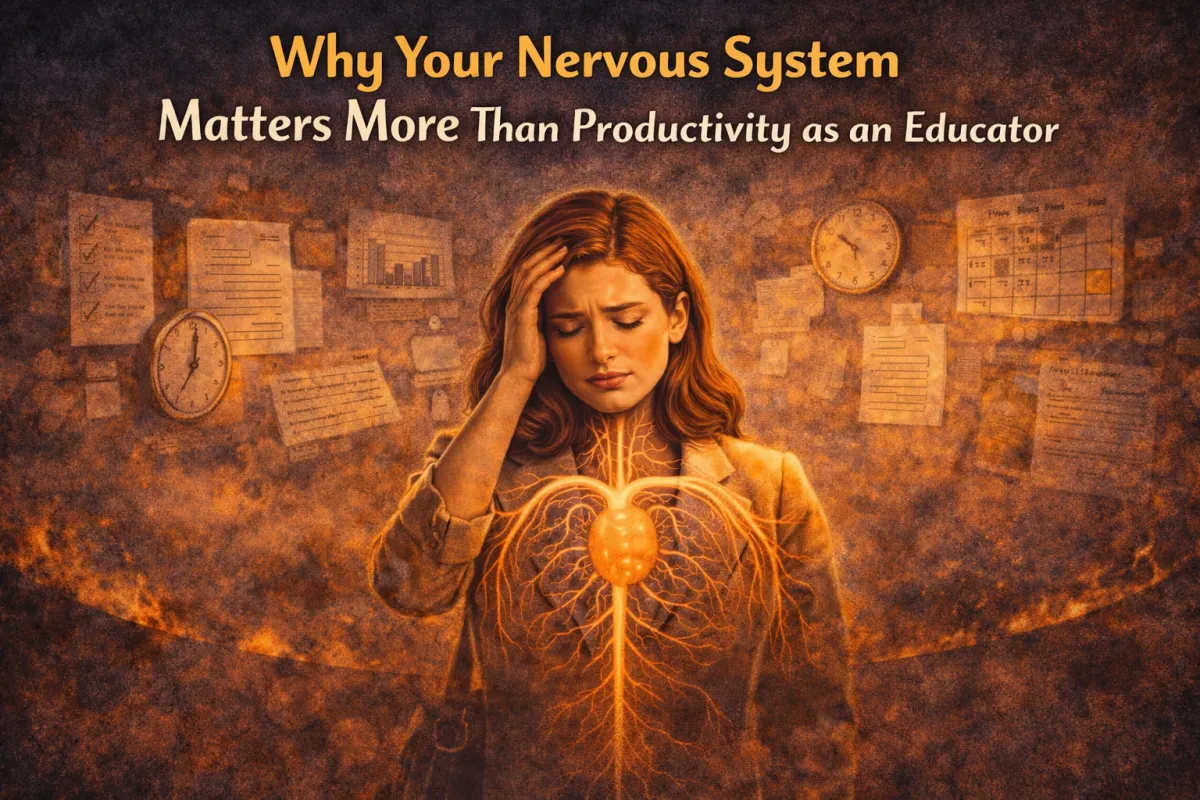
Why Your Nervous System Matters More Than Productivity as an Educator
Many burnout solutions offered to educators focus on productivity.
Teachers are encouraged to become more organized, manage their time better, and find ways to complete more tasks within the same number of hours.
While organization can be helpful, these strategies often overlook a crucial factor: the condition of the educator’s nervous system.
Teaching places educators in environments that require constant awareness, emotional regulation, and rapid decision-making. Over time, these demands can keep the nervous system in a prolonged state of alertness.
When this happens, exhaustion, irritability, and difficulty relaxing can become common experiences.
Understanding how the nervous system responds to stress can help educators develop more sustainable ways of working and recovering.
The Nervous System and Stress in Education
The nervous system is responsible for regulating how the body responds to challenges and stress.
In teaching environments, educators frequently encounter situations that require quick responses, emotional regulation, and ongoing attention.
These demands activate the body’s stress response, helping teachers stay alert and responsive during the school day.
However, when this state of heightened alertness continues for long periods without sufficient recovery, the nervous system may struggle to return to a relaxed state.
This can contribute to feelings of chronic stress and fatigue.
Why Productivity Alone Cannot Solve Burnout
When educators are already overwhelmed, adding more productivity systems can unintentionally increase pressure.
Instead of reducing stress, these systems may reinforce the idea that teachers simply need to work more efficiently.
However, burnout often develops when the nervous system remains in a prolonged state of stress.
Supporting the nervous system requires periods of rest, recovery, and activities that allow the body to shift out of constant alertness.
Practices That Support Nervous System Recovery
Educators can support their nervous systems through simple daily practices such as:
Taking short pauses between demanding tasks
Engaging in physical movement or stretching
Spending time in quiet environments after work
Practicing breathing or relaxation exercises
These activities help the body transition from stress into recovery.
Over time, this balance between effort and recovery supports greater emotional stability and resilience.
Sustainable Teaching Requires Nervous System Support
Teaching will always involve moments of stress and challenge.
However, when educators learn how to support their nervous systems, they can move through these challenges with greater stability.
Rather than constantly pushing through exhaustion, teachers develop rhythms that include both effort and recovery.
This approach supports long-term wellbeing and sustainable leadership in education.

