How Teachers Can Reduce Mental Overload and Regain Clarity
Many educators are not physically exhausted first.
They are mentally overloaded.
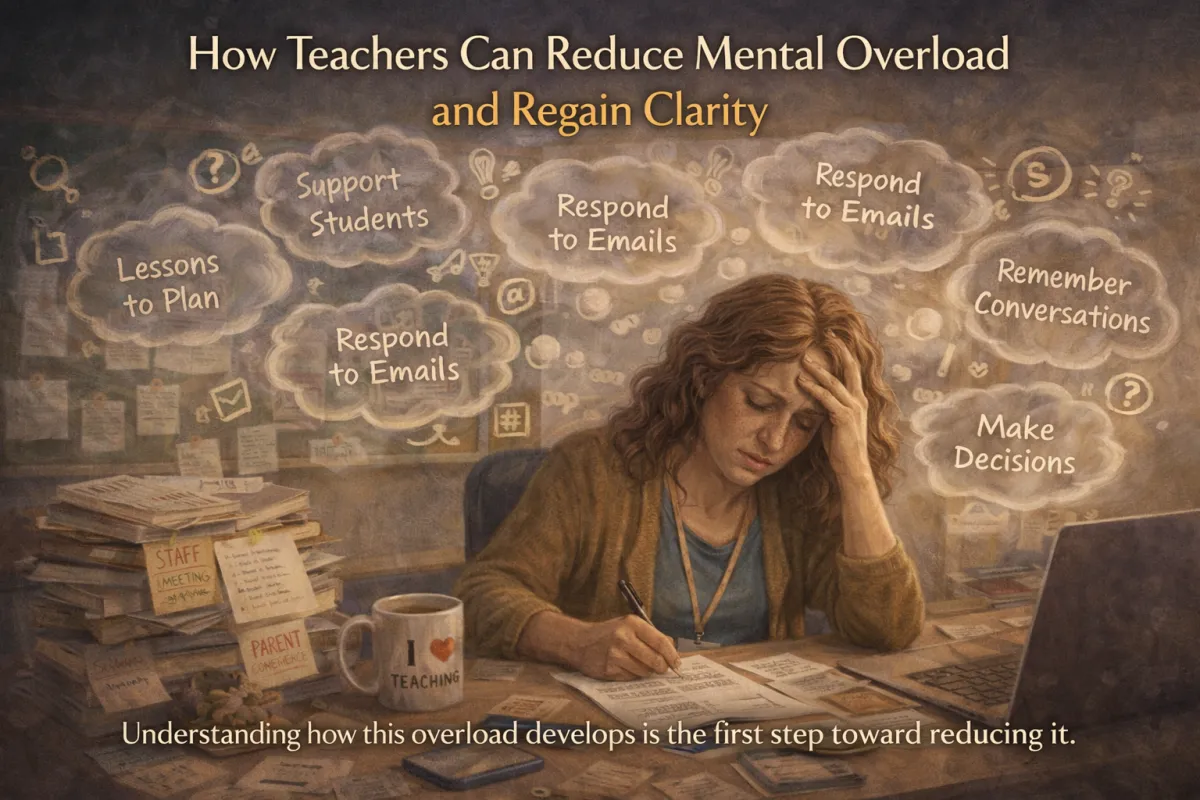
By the middle of the week, it can feel like there are too many things to hold in your mind at once. Lessons to plan, students to support, emails to respond to, conversations to remember, and decisions to make.
Even when tasks are completed, the mental load often remains.
This creates a constant sense of pressure that does not fully switch off.
Over time, mental overload reduces clarity, increases stress, and makes even simple decisions feel more difficult.
Understanding how this overload develops is the first step toward reducing it.
What Mental Overload Actually Is
Mental overload is not just “having a lot to do.”
It is the experience of holding too many open loops in your mind at the same time.
For teachers, this often includes:
Remembering multiple student needs
Tracking unfinished tasks
Anticipating upcoming responsibilities
Managing ongoing classroom dynamics
The brain is continuously processing, even when you are not actively working.
This is why many educators feel mentally tired even after completing their tasks.
Why Teaching Creates Constant Cognitive Demand
Teaching requires rapid switching between different types of thinking.
Within a single hour, educators may:
Deliver content
Manage behavior
Adjust instruction
Respond emotionally to students
Make quick decisions
This constant switching increases cognitive load.
Unlike roles with long periods of focused work, teaching rarely allows the brain to fully settle into one task.
Over time, this leads to accumulation of mental fatigue.
The Impact of Unfinished Tasks
One of the biggest contributors to mental overload is unfinished work.
When tasks remain incomplete, the brain continues to track them.
This creates a background level of stress, often experienced as:
Mental clutter
Difficulty relaxing
Persistent thinking about work
Even small unfinished tasks can contribute to this effect.
How to Reduce Mental Overload
Reducing mental overload does not require doing more.
It requires holding less in your mind.
Practical strategies include:
1. Externalize Tasks
Write things down instead of trying to remember them. This reduces the need for constant mental tracking.
2. Limit Open Loops
Complete small tasks where possible or clearly schedule them for later.
3. Reduce Decision Points
Create consistent routines to minimize daily decision-making.
4. Prioritize Fewer Things
Focus on what is essential rather than trying to manage everything equally.
Key Takeaways
Mental overload comes from too many open loops in the mind
Teaching creates constant cognitive demand
Unfinished tasks increase mental pressure
Clarity improves when mental load is reduced
Conclusion
Mental clarity is not created by pushing harder.
It is created by reducing what your mind is trying to carry.
When educators simplify, externalize, and prioritize effectively, they create space for clearer thinking and more sustainable work.