The R.I.S.E. Method: A New Way for Educators to Reset Their Lives
Many educators reach a point where traditional solutions for burnout no longer feel sufficient.
They have tried productivity systems, time-management strategies, and even professional development programs designed to help them manage their workload more efficiently.
Yet despite these efforts, many teachers still feel overwhelmed.
The problem is rarely a lack of effort or commitment. In fact, high-achieving educators often care deeply about their students and their professional responsibilities.
The challenge is that most burnout solutions focus on doing more efficiently, rather than leading life and work differently.
Sustainable change often requires a new approach—one that considers energy, emotional wellbeing, and professional responsibilities together.
One such approach is the R.I.S.E. Method™, a framework designed to help educators move from overwhelm toward clarity and sustainable leadership.
Why Educators Need a Different Approach
Education is a profession that demands both intellectual and emotional engagement.
Teachers manage classrooms, support students through challenges, communicate with families, and respond to evolving expectations within schools.
Over time, these responsibilities can expand far beyond what traditional productivity systems were designed to manage.
When educators try to solve burnout by simply becoming more organized or efficient, they may unintentionally add even more pressure to their already full schedules.
A sustainable solution must address more than time management. It must also consider energy, emotional capacity, and the structure of daily work.
This is where a framework like the R.I.S.E. Method™ becomes valuable.
What the R.I.S.E. Method™ Represents
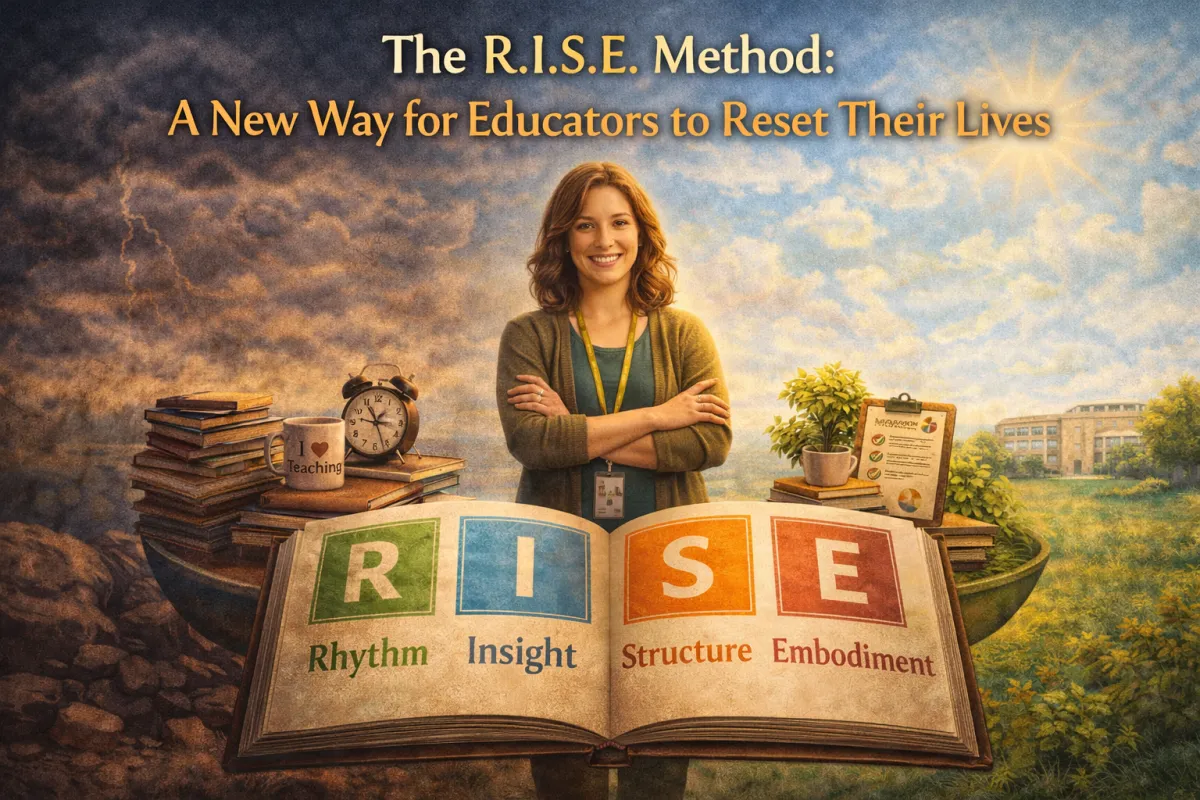
The R.I.S.E. Method™ is built around four interconnected elements that support sustainable leadership in education.
Each element helps educators move away from reactive survival mode and toward intentional alignment.
The framework includes:
Rhythm
Educators identify natural energy patterns and create weekly rhythms that support both professional responsibilities and personal wellbeing.
Insight
Teachers develop awareness of patterns that contribute to overwhelm, such as overfunctioning, unclear boundaries, or emotional overload.
Structure
Practical systems and boundaries are introduced to support sustainable work habits and protect personal time.
Embodiment
New habits and leadership practices are integrated gradually until they become part of everyday life.
Together, these elements help educators create lasting change rather than temporary relief.
Moving From Survival Mode to Self-Leadership
Many educators operate in a constant state of responsiveness.
They respond to emails, student needs, administrative requests, and unexpected challenges throughout the day. While this responsiveness is often necessary, it can gradually place educators in a reactive mindset.
The R.I.S.E. Method™ encourages a shift toward self-leadership.
Instead of reacting to every demand, educators learn to:
Protect their energy intentionally
Establish clear boundaries
Structure their schedules around sustainable rhythms
Respond to challenges with greater clarity and stability
This shift helps educators regain a sense of control over their time and capacity.
Why Small Changes Create Lasting Impact
One reason many burnout solutions fail is that they require dramatic changes that are difficult to sustain.
The R.I.S.E. Method™ focuses on gradual, practical adjustments that fit into educators’ real lives.
Rather than attempting to change everything at once, the framework encourages small shifts such as:
Protecting specific evenings each week
Reducing patterns of overfunctioning
Establishing clearer boundaries around communication
Creating intentional recovery periods during the week
Over time, these small adjustments accumulate into meaningful transformation.
Educators begin experiencing greater stability, clarity, and energy without needing to abandon the work they care about.
A Path Toward Sustainable Leadership
Sustainable leadership does not mean caring less about students or colleagues. Instead, it means leading in a way that allows educators to maintain their energy and commitment over the long term.
When educators develop rhythms, boundaries, and supportive structures, they are better able to remain present, patient, and focused in their work.
The R.I.S.E. Method™ provides a practical path for educators who want to move beyond temporary burnout recovery and toward lasting alignment.
Instead of constantly trying to keep up with expanding demands, educators learn to design work and life in ways that support both professional impact and personal wellbeing.
Key Takeaways
Many traditional burnout solutions focus only on productivity and efficiency.
Educators often need a deeper approach that addresses energy, boundaries, and emotional capacity.
The R.I.S.E. Method™ includes four elements: Rhythm, Insight, Structure, and Embodiment.
Small, practical adjustments can create meaningful long-term change.
Sustainable leadership allows educators to continue making an impact without constant exhaustion.
Conclusion
Education is a profession built on dedication and care. Teachers often invest enormous energy into supporting their students and communities.
However, when that dedication leads to chronic overwhelm, it becomes difficult to sustain both professional impact and personal wellbeing.
Frameworks such as the R.I.S.E. Method™ offer educators a different path forward.
By focusing on rhythm, awareness, supportive structures, and sustainable habits, educators can begin shifting away from survival mode and toward intentional leadership.
This approach allows teachers to remain deeply committed to their work while also creating lives that support their energy, clarity, and long-term wellbeing.
I would love to see you embrace this approach within our community... get started here: www.kickislifedesign.com/info

