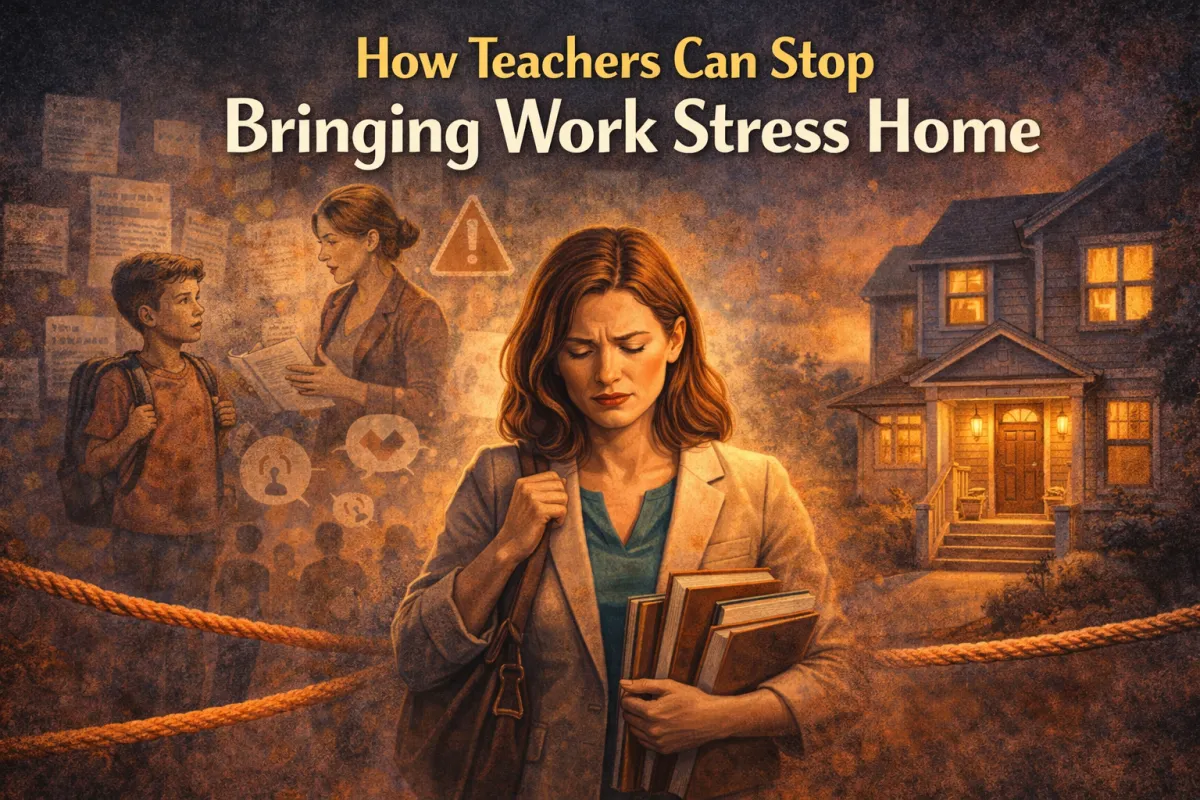
How Teachers Can Stop Bringing Work Stress Home
For many educators, the school day does not truly end when they leave the building.
Even after the final bell, work often continues mentally and emotionally. Conversations replay in the mind, unfinished tasks linger, and concerns about students or colleagues follow educators into their evenings.
Over time, this pattern can make it difficult to fully disconnect from work. Personal time becomes partially occupied by professional responsibilities, leaving little space for genuine rest and recovery.
This experience is extremely common among teachers and school leaders. Education is a profession that requires both intellectual and emotional investment, and many high-achieving educators care deeply about the people they support.
However, when work stress consistently follows educators home, it becomes difficult to maintain long-term wellbeing.
Learning how to mentally and emotionally transition out of work is one of the most important skills educators can develop for sustainable leadership.
Why Educators Often Carry Work Stress Home
Education environments involve constant decision-making, problem-solving, and emotional engagement. Teachers often manage classrooms filled with diverse needs while also balancing administrative expectations and communication with families.
Because of this complexity, many educators develop a habit of continuing to process work long after the day ends.
Common experiences include:
Replaying difficult conversations with students or colleagues
Worrying about unfinished tasks
Mentally preparing the next day’s lessons or meetings
Feeling responsible for problems that occurred during the day
This ongoing mental activity keeps the nervous system in a state of alertness. Without intentional transitions between work and personal life, the mind continues operating in “problem-solving mode.”
Over time, this can lead to exhaustion and difficulty relaxing.
The Hidden Cost of Constant Mental Engagement
When work stress regularly follows educators home, the impact extends beyond simple fatigue.
Many teachers begin to experience:
Difficulty fully relaxing in the evening
Reduced quality of sleep
Less presence with family and friends
Emotional exhaustion at the start of the next workday
These patterns create a cycle where educators never fully recover from the demands of the previous day.
Rest becomes partial instead of restorative.
Breaking this cycle requires more than simply trying to “stop thinking about work.” Instead, educators need intentional ways to transition out of professional responsibilities at the end of the day.
Creating a Clear End-of-Day Transition
One of the most effective ways to reduce work stress at home is to create a consistent end-of-day transition ritual.
This ritual signals to the mind that the workday has concluded.
Examples of simple transition practices include:
Writing down the top priorities for the next day before leaving work
Closing the laptop or workspace intentionally
Taking a short walk after leaving school
Practicing a few minutes of reflection or deep breathing
These small actions help the nervous system shift from active problem-solving into recovery mode.
Consistency is important. When the brain recognizes the same transition pattern each day, it becomes easier to release work-related thoughts.
Setting Mental Boundaries Around Work
Many educators think of boundaries only in terms of schedules or responsibilities. However, mental boundaries are equally important.
Mental boundaries involve deciding when work-related thinking is appropriate and when it is not.
For example:
Avoid checking school email late in the evening
Set a personal rule for when work conversations end for the day
Redirect thoughts when the mind begins replaying school situations
At first, this practice can feel challenging. The mind may automatically return to work-related concerns.
Over time, however, consistent boundaries teach the brain that evenings are meant for rest, personal life, and recovery.
Protecting Your Energy Outside the Classroom
Teaching requires emotional presence and sustained attention throughout the day. Without adequate recovery time, these demands can gradually drain personal energy.
Protecting time outside the classroom allows educators to replenish the resources they need to continue doing meaningful work.
Healthy evening practices might include:
Engaging in hobbies or creative activities
Spending uninterrupted time with family
Physical movement or exercise
Quiet reflection or relaxation
These activities help restore the mental clarity and emotional balance required for effective teaching.
Sustainable leadership in education depends not only on professional dedication but also on protecting the time that restores energy.
Key Takeaways
Many educators continue processing work mentally after the school day ends.
Carrying work stress home can lead to emotional exhaustion and reduced recovery.
End-of-day transition rituals help signal the brain that work has finished.
Mental boundaries around email, conversations, and problem-solving are essential.
Protecting personal time allows educators to restore the energy needed for sustainable leadership.
Conclusion
Education is a profession that invites deep care and commitment. Teachers and school leaders often invest enormous energy in supporting the people around them.
However, when work stress follows educators home every day, recovery becomes limited and burnout becomes more likely.
Learning how to transition out of work is not about caring less about the profession. It is about creating the conditions necessary to continue contributing over the long term.
When educators establish clear transitions, protect their evenings, and allow space for genuine rest, they strengthen their ability to lead, teach, and support others.
The goal is not to separate completely from meaningful work. The goal is to ensure that work remains sustainable within a full and balanced life.

