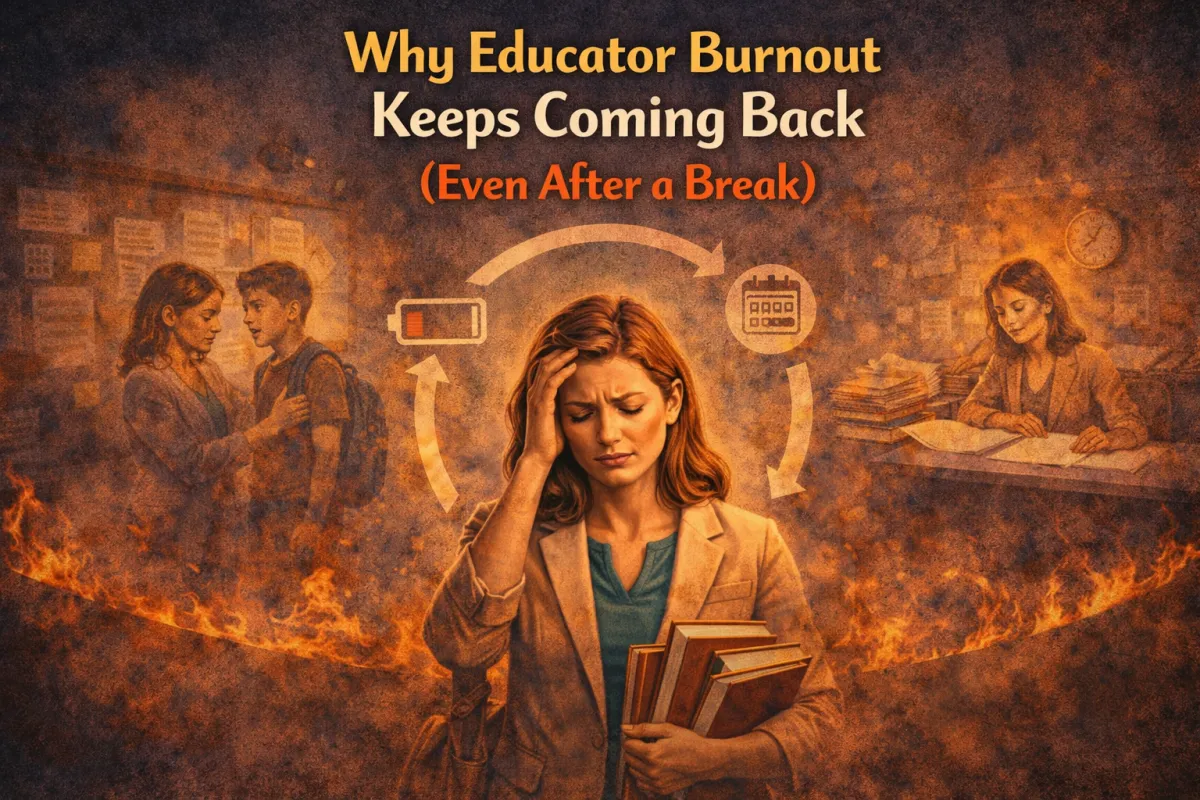
Why Educator Burnout Keeps Coming Back (Even After a Break)
Many educators recognize the feeling of burnout. After particularly demanding periods of the school year, exhaustion can become overwhelming. Teachers may feel emotionally drained, mentally overloaded, and unsure how to sustain their energy long term.
Often, the solution seems simple: take a break.
School holidays, long weekends, or even extended time away from work can provide temporary relief. For a short time, educators may feel more rested and hopeful about returning to the classroom.
Yet for many teachers, something frustrating happens.
Within weeks of returning to work, the same exhaustion begins to reappear.
The stress returns. The pressure builds again. The sense of overwhelm slowly resurfaces.
This experience leads many educators to wonder why burnout keeps coming back even after time to rest.
The answer often lies not in the amount of rest taken, but in the systems and patterns that remain unchanged when work resumes.
Burnout Is Not Just About Being Tired
Burnout is often misunderstood as simple exhaustion. While fatigue is certainly part of the experience, burnout typically develops from a deeper imbalance between responsibilities, expectations, and personal capacity.
In education, this imbalance can come from several sources:
High emotional labor
Increasing administrative responsibilities
Limited resources or support
Persistent patterns of overfunctioning
Difficulty maintaining boundaries
When these factors remain unchanged, rest alone cannot fully resolve the problem.
Even after a break, educators may return to the same environment, expectations, and habits that contributed to burnout in the first place.
As a result, exhaustion gradually rebuilds.
The Burnout Cycle in Education
Many educators unknowingly move through a recurring cycle of burnout.
The cycle often begins with high commitment and dedication. Teachers invest significant time and energy in supporting students, solving problems, and maintaining classroom stability.
Over time, responsibilities expand and emotional demands increase. Educators may begin working longer hours, taking on additional roles, or carrying concerns about students beyond the classroom.
Eventually, fatigue appears. Stress becomes more difficult to manage, and the educator begins feeling overwhelmed.
At this point, a break or holiday may provide temporary relief.
However, when the same workload patterns and responsibilities return unchanged, the cycle begins again.
Understanding this cycle helps explain why burnout can reappear repeatedly throughout a teaching career.
Why Rest Alone Is Not Enough
Rest is essential for recovery, but it cannot fully resolve burnout when the underlying structures of work remain the same.
If educators return from a break to:
The same overloaded schedule
The same lack of boundaries
The same emotional over-responsibility
The same pressure to constantly perform
then the conditions that created burnout still exist.
Rest provides temporary relief, but sustainable recovery requires changes in how work, energy, and responsibilities are structured.
Without these changes, educators often feel as though they are constantly trying to recover while the demands of the profession continue increasing.
Shifting From Survival Mode to Sustainable Leadership
Breaking the burnout cycle requires a shift in perspective.
Instead of simply trying to recover between demanding periods of work, educators benefit from designing systems that support their energy throughout the school year.
This includes developing:
Clear professional boundaries
Sustainable weekly rhythms
Supportive structures for managing responsibilities
Intentional recovery practices
These adjustments allow educators to remain engaged and effective without constantly operating in survival mode.
Over time, sustainable leadership replaces reactive exhaustion.
Small Changes Can Interrupt the Burnout Cycle
Addressing burnout does not require completely changing careers or abandoning meaningful work in education.
Often, small structural changes can significantly improve long-term sustainability.
Examples include:
Defining clear end-of-day boundaries
Protecting specific evenings for personal recovery
Reducing patterns of overfunctioning
Creating structured weekly rhythms that protect energy
These adjustments help educators maintain their commitment while also protecting their wellbeing.
When educators shift from reacting to constant demands toward intentionally designing their work patterns, the burnout cycle can begin to weaken.
Key Takeaways
Educator burnout often returns because the underlying work patterns remain unchanged.
Rest alone cannot resolve burnout when responsibilities and expectations stay the same.
Many teachers experience a repeating cycle of commitment, exhaustion, recovery, and burnout.
Breaking this cycle requires changes in boundaries, rhythms, and leadership patterns.
Sustainable leadership helps educators maintain their energy while continuing meaningful work.
Conclusion
Burnout is not a personal failure, and it is not simply the result of working too hard during a difficult season.
For many educators, burnout develops from patterns that gradually accumulate over time: expanding responsibilities, emotional overinvestment, and the absence of clear boundaries.
While rest is important, lasting recovery often requires deeper adjustments in how educators structure their work and protect their energy.
When teachers begin shifting from reactive survival mode toward sustainable leadership, something important changes.
Work becomes more manageable. Energy becomes more stable. And the passion that originally drew educators to their profession can begin to reemerge.
Teaching is meaningful work. Ensuring that it remains sustainable allows educators to continue making a difference without sacrificing their wellbeing.