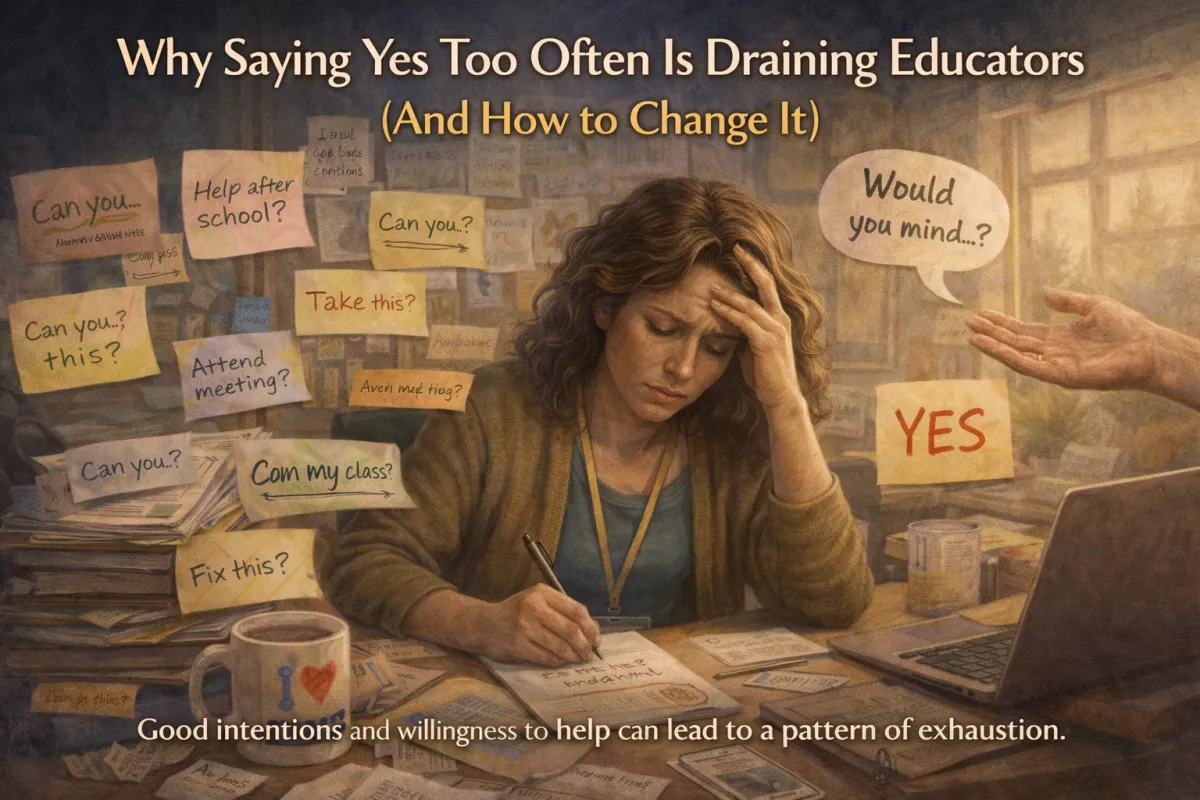
Why Saying Yes Too Often Is Draining Educators (And How to Change It)
Many high-achieving educators are known for being dependable.
They are the ones who step in, help out, and make sure things get done. Saying yes becomes part of how they operate professionally.
Over time, however, this pattern can become exhausting.
What begins as helpfulness gradually turns into constant availability. Requests increase, expectations grow, and personal capacity becomes stretched.
Eventually, saying yes stops feeling like a choice and starts feeling like an obligation.
This is where exhaustion begins.
How “Saying Yes” Becomes Automatic
In education, saying yes is often reinforced.
Educators are praised for:
Being flexible
Supporting colleagues
Going the extra mile
This creates an environment where declining requests can feel uncomfortable or even inappropriate.
For many educators, the decision to say yes happens quickly, without pause.
It becomes a reflex rather than a conscious choice.
The Hidden Cost of Always Agreeing
Saying yes may feel helpful in the moment, but it often carries long-term consequences:
Increased workload
Reduced time for recovery
Mental overload
Emotional fatigue
Each additional commitment requires time, energy, and attention.
When these resources are already stretched, even small requests can contribute to exhaustion.
Why Saying No Feels So Difficult
The difficulty of saying no is rarely about the request itself.
It is often connected to identity and responsibility.
Many educators think:
“I should be able to handle this.”
“I don’t want to let anyone down.”
“It will only take a little extra time.”
These beliefs reinforce the habit of overextending.
How to Begin Setting Boundaries
Shifting this pattern starts with awareness.
Practical steps include:
Pausing before responding to requests
Evaluating current capacity
Setting limits on additional commitments
Practicing simple, clear responses
Boundaries do not need to be complex. They need to be consistent.
Key Takeaways
Saying yes too often leads to overload and exhaustion
The habit is often reinforced by workplace culture
Boundaries help protect time and energy
Small changes create meaningful relief
Conclusion
Saying yes is not the problem.
Saying yes without considering capacity is.
When educators begin making intentional choices about their commitments, they create space for sustainability and clarity.
Start your Self-Led Reset today and See how to set Boundaries without guilt: www.kickislifedesign.com/info